Blogs
Is your MAM ready for 2026? A checklist for future‑proof media operations
Dec 29, 2025
Technology

A Media Asset Management (MAM) system is ready for 2026 when it centralizes ingest, cataloguing, search and archiving in a single web-based platform accessible from anywhere, with the flexibility to adapt to different storage technologies and workflows. VSNExplorer MAM delivers these core capabilities through its HTML5 interface and open architecture.
Why MAM Requirements Are Different in 2026
Modern media operations handle content across multiple formats, locations and destinations simultaneously. Teams need a system that controls assets from ingest through cataloguing and archiving, making content immediately searchable and reusable without manual intervention.
A 2026-ready MAM must:
Generate proxies, thumbnails and keyframes automatically after ingest for fast navigation.
Enable precise cataloguing (manual and AI-assisted) so searches return exact clips or segments.
Track assets across different storage types (online, nearline, offline) from a single interface.
VSNExplorer MAM provides these functions through a 100% web-based interface that works across browsers and operating systems, with deployment options from on-premises to cloud environments.
Architecture: Web-Based and Integration-Ready
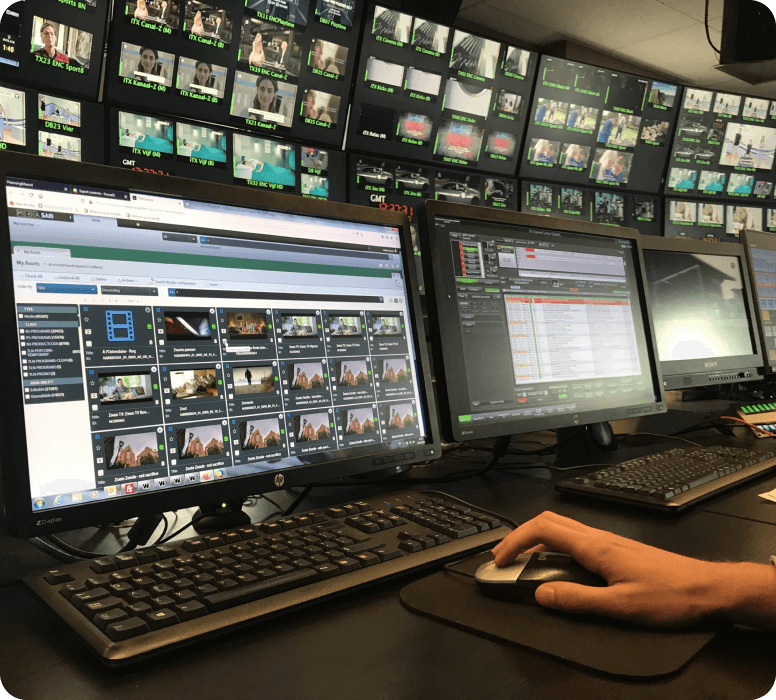
The MAM must be accessible without complex installations and integrate with existing workflows. VSNExplorer MAM is a service-oriented platform with a fully web-based HTML5 interface secured via HTTPS.
Key characteristics:
Users access the system from any location using only a web browser, login and password.
Open APIs enable integration with third-party systems such as traffic, news production and quality control workflows.
Scalable deployment options, including cloud-based SaaS models with pay-per-use pricing.
This architecture supports remote work and gradual infrastructure evolution without changing user workflows.
Storage and Asset Tracking: Online, Nearline and Offline
VSNExplorer MAM tracks assets across different storage layers—NAS, SAN, ODA, playout servers and HSM-managed archives—keeping catalog information centralized in the database regardless of where files physically reside.
Supported capabilities include:
Smart storage management for Online, Offline and Nearline tiers, with control over which storage is designated as nearline or offline via HSM integration.
Archiving and partial restore to LTO robots (via HSM systems like Xendata, SGL, Front Porch Digital), Blu-Ray, hard disks and other media, maintaining permanent low-res copies for preview and editing.
Asset tracking across all storage locations, providing real-time visibility of file transfers and content status.
Engineering teams maintain full control over storage policies and asset locations from the web interface.
Ingest and Media Preparation
Efficient ingest sets the foundation for everything else. VSNExplorer MAM handles this through:
VSN Desktop Agent for registering and transferring content from local or remote locations, plus web-based drag-and-drop upload.
Automatic processing after ingest: transcoding, low-res proxy generation, thumbnails, keyframes and shot-change detection for quick timeline navigation.
Integration with ingest solutions for automatic content inclusion and metadata import (XML, TXT, XLS or API).
These steps ensure assets are immediately usable for cataloguing and search.
Cataloguing, AI Metadata and Search
VSNExplorer MAM combines manual precision with AI automation:
Manual cataloguing via the Logger tool, supporting markers, segments (frame or GOP accurate), predefined metadata and free text, including segment-level copyright blocking.
AI metadata extraction through integration with engines from Microsoft Azure, Google Cloud, IBM Watson and AWS, analyzing content for automatic cataloguing with results visible directly in the interface.
Advanced search with predictive indexing, semantic search and faceted filters to locate full assets or specific segments quickly.
Customizable metadata models (with rules editor) and support for standards like EBU and SMPTE adapt to different content types and workflows.
Security and Operational Control
Protection and visibility are built into every operation:
Secure access via HTTPS with integration to corporate domains (AD, LDAP) for centralized user management.
Encrypted file transfers (AES-256 bits) and granular permissions by user, department or role.
Real-time monitoring of file transfers and asset status across all connected storage systems.
Multitenant architecture allows each organization to customize access and security parameters.
Publishing and Distribution
VSNExplorer MAM supports content delivery to:
Linear TV playout servers and web platforms.
YouTube publishing directly from the interface.
Additional distribution workflows can be implemented through the platform's open integration capabilities.
Use this checklist to evaluate your current MAM against proven VSNExplorer capabilities:
Architecture and Access
Web-based HTML5 interface accessible via any browser with HTTPS security.
Open APIs for integration with traffic, news, QC and other production systems.
Deployment flexibility (on-premises, cloud, SaaS).
Ingest and Preparation
Desktop Agent and web upload for local/remote ingest.
Automatic proxy, thumbnail, keyframe and shot detection generation.
Metadata import from ingest solutions via files or API.
Cataloguing and Search
Logger tool for manual segment cataloguing and markers.
AI metadata integration (Azure, Google, IBM Watson, AWS).
Predictive search with semantic and faceted capabilities.
Storage and Archive
Asset tracking across Online/Nearline/Offline storage types.
HSM integration for LTO archiving with partial restore.
Permanent low-res copies for preview and remote editing.
Security and Operations
AD/LDAP integration and role-based permissions.
AES-256 encrypted transfers and real-time monitoring.
Multitenant architecture for customized deployments.
From Checklist to Next Steps
Teams checking most of these boxes have a solid foundation for 2026 media operations. VSNExplorer MAM provides these production-proven capabilities in a single, web-accessible platform that scales with business needs and integrates with existing infrastructure.