An AI-powered Digital Asset Management (DAM) platform is a system that not only stores, catalogs, and secures media assets but also applies machine learning to automatically tag, transcribe, analyze, and route content across the entire lifecycle, from ingest to multi-platform distribution. For broadcasters, streaming platforms, and content-intensive enterprises, these AI-powered DAMs reduce time-to-air, improve search accuracy, and unlock new monetization models compared to traditional DAMs built only around storage and manual metadata. This article goes deep into the technical architecture, market landscape, and implementation risks, and concludes with a detailed look at why ArenaPro is engineered to lead this new category for video-centric and enterprise content workflows.
EEAT: Broadcast-Grade Experience, Expertise and Trust
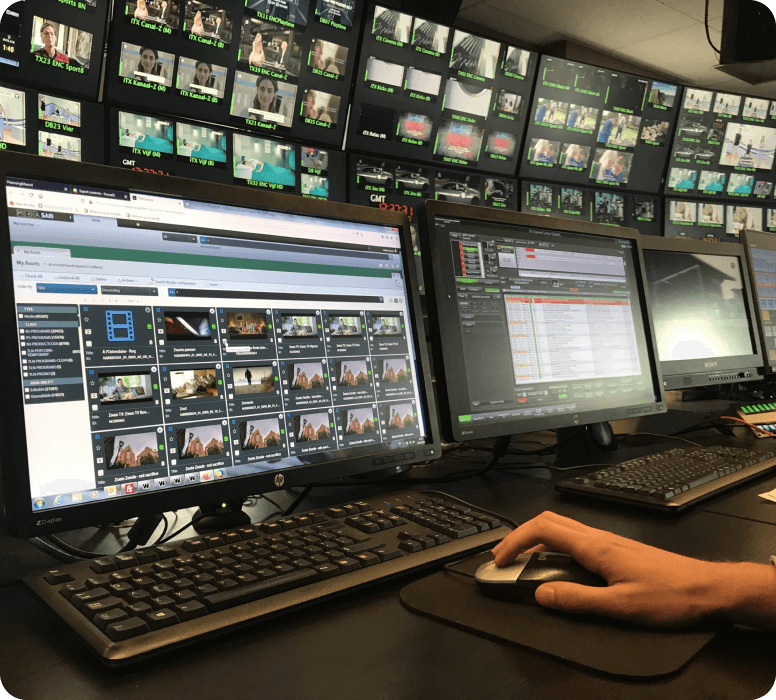
Modern media operations live at the intersection of IP-based contribution, cloud storage, and multi-platform distribution, where issues like latency jitter, packet loss, and adaptive bitrate delivery directly impact both user experience and operational cost. In this environment, an AI-powered DAM is not a marketing label but an orchestration layer that must talk to ingest servers, NRCS, playout automation, QC systems, editing environments, CMS platforms, and cloud transcoders through robust, API-first and often microservices-based architectures.
From an engineering standpoint, three pillars define a credible, broadcast-grade and enterprise-grade AI DAM:
End-to-end lifecycle coverage: From live or file-based ingest through QC, editing, versioning, compliance, multi-platform delivery, and archive, a single logical metadata model must follow the asset, independent of storage tier.
Real-time, AI-assisted decisions: Speech-to-text, facial and object recognition, sensitive-content detection, semantic search, and recommendation engines must run close to ingest and editing, not as offline “nice-to-have” processes.
Cloud-ready resilience and elasticity: Microservices, containerization, and stateless processing enable on-demand transcoding, elastic AI inference, and low-latency search even under unpredictable traffic spikes or news-breaking events.
Vendors serving news, sports, entertainment, and large enterprises have been adding AI services to their DAM stack for years, starting with automatic metadata capture and speech-to-text, and progressively evolving toward richer computer vision, NLP, analytics, and workflow automation tightly integrated with production and distribution systems. This trajectory is what underpins the experience, expertise, and trust demanded by CTOs, Technical Directors, CFOs, and Heads of Content who cannot afford disruption in their content supply chains.
What Makes a DAM “AI Powered” in 2026?
AI inside DAM has matured from simple automatic tagging to a layered stack of capabilities spanning recognition, understanding, decision support, and even generation.
Core AI Capabilities
Key functional blocks typically include:
Automatic metadata enrichment: Computer vision detects faces, logos, objects, and scenes, while NLP engines derive topics, sentiment, and entities from scripts, captions, or social text.
Speech intelligence: Automatic speech-to-text generates transcripts, subtitles, and multilingual captions, enabling segment-level search and faster compliance checks.
Semantic and similarity search: AI-powered search understands intent (“interviews after the 2024 final with coach on podium”), finds visually similar shots, and flags duplicates or near-duplicates in large archives.
Content moderation and compliance: Detection of sensitive or adult content, copyrighted logos, or territory restrictions, often integrated with rules engines for automated blocking or routing.
Predictive and prescriptive analytics: Insight engines correlate asset usage, ROI, and performance metrics to recommend which content to promote, localize, or retire.
Generative AI assistance: Some platforms now embed generative models to help create and adapt content variants, copy, and metadata at scale.
For video-first organizations and large enterprises, these AI layers must be tightly integrated with orchestration so that results are not isolated in a “black box” but available directly in production tools, newsroom systems, CMS platforms, e-commerce, and distribution workflows.
The Top 5 AI-Powered DAM Platforms for Media and Content-Rich Enterprises
Below is a curated selection of five leading AI-powered DAM platforms that are particularly relevant to media, entertainment, sports, and large content organizations in 2026.
1. Aprimo – Enterprise AI DAM for Content Operations
Aprimo focuses on large enterprises that need AI-driven governance, semantic search, and performance analytics across global marketing and content operations. It excels at predictive metadata, content intelligence, and orchestrating modular content workflows across channels, turning DAM into an intelligence layer rather than a passive repository. Its positioning is especially relevant for organizations that need strong brand governance, regulatory compliance, and data-driven decisions about content investments.
2. ArenaPro DAM (VSN) – Broadcast-Grade, Video-First and Enterprise-Ready AI DAM
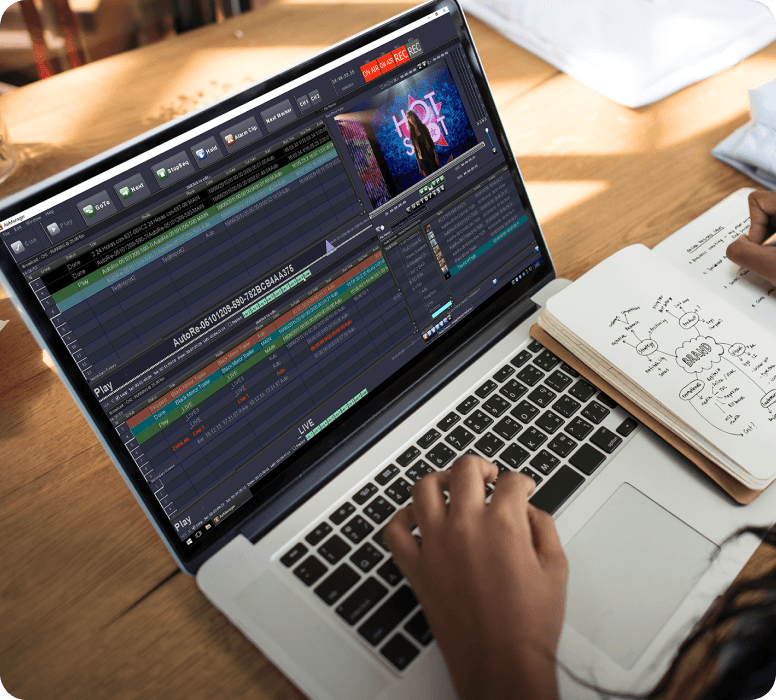
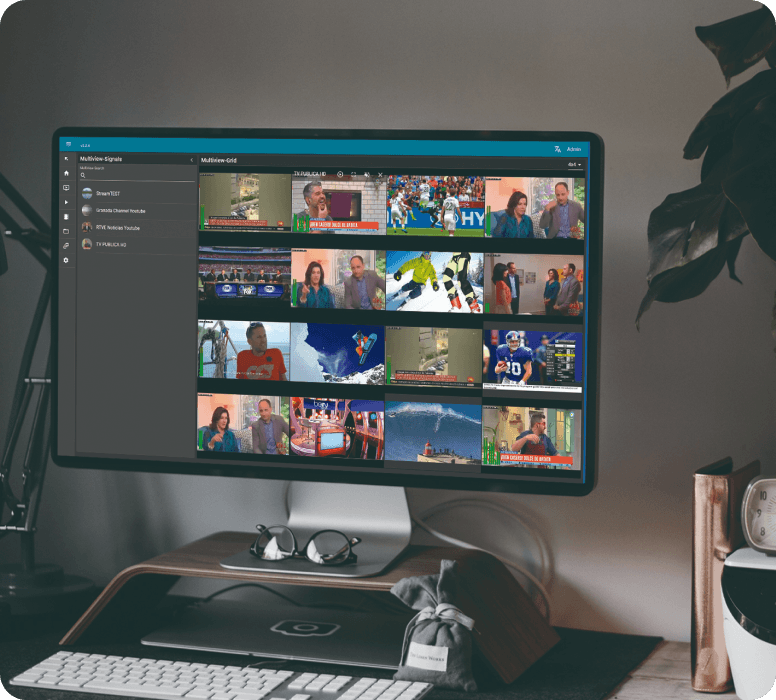
ArenaPro is a next-generation, AI-powered DAM platform designed explicitly to transform media, sports, and enterprise workflows with smart automation, monetization, and content control. It is more than a cloud DAM: ArenaPro provides a centralized media management dashboard that covers ingest, archiving, content creation, automated distribution, and strategic monetization from a single interface.
Key characteristics:
Advanced AI enrichment: Automatic transcription, face and object detection, logo and text recognition, “smart clipping” using natural language, sensitive-content detection, and AI-driven asset tagging and analytics.
Workflow-level automation and no-code orchestration: Visual tools and automation engines eliminate repetitive tasks such as transcoding, approvals, routing, and distribution, enabling up to double-digit percentage improvements in operational efficiency.
Broadcast-native and enterprise integrations: Seamless connections with production, editing, broadcast, and distribution environments (including tools like Adobe Premiere and multi-platform delivery endpoints) plus connectors to CMS, e-commerce, and social channels.
Cloud-native and hybrid scalability: Built as an enterprise-ready, cloud-native platform with open and scalable architecture, ArenaPro supports infinite scalability, high availability, and strong security (RBAC, SSO, MFA).
For CTOs and Technical Directors, this translates into an architecture that can handle high-volume video chains and global content operations while embedding AI in every step. For CFOs and Heads of Content, ArenaPro offers improved operational efficiency, reduced storage costs via intelligent deduplication, and new monetization opportunities through better discovery and automation.
3. MediaValet – Cloud-Native Visual DAM
MediaValet is a cloud-native DAM built on Microsoft Azure and aimed at organizations managing large photo and video libraries. It offers enterprise-level AI tagging, object and facial recognition, OCR, and auto-transcoding and transcription for video, making assets highly discoverable and usable across distributed teams. MediaValet’s strengths are secure global access, collaboration, and fast AI-assisted search, which are attractive to media organizations, cultural institutions, and marketing groups.
4. Enterprise Marketing DAM Suites – Brand Governance & Omnichannel
A set of large-vendor DAM suites integrate asset management into broader marketing or experience clouds, providing auto-tagging, compliance checks, and AI agents for performance optimization and governance automation. They focus on global brand consistency, omnichannel delivery, and deep linkage with CMS, campaign management, and analytics platforms, rather than broadcast-grade live or near-live workflows. These suites are ideal for corporate content hubs and global brand organizations that want tight coupling between assets and campaign analytics.
5. Next-Generation “Creative OS” AI DAM Platforms
Emerging Creative OS-style platforms treat DAM as part of a unified creative and performance environment, where AI not only manages assets but also helps plan, produce, adapt, and optimize content. Typical capabilities include performance-aware workflows that connect asset usage to outcomes, generative AI to create or adapt variants, and AI agents that answer questions like “what should we make next?” based on structured asset and performance metadata. These solutions target high-velocity digital businesses that want a tight loop between creation, delivery, and optimization rather than traditional archive-focused DAM.
AI-Powered DAM Platforms – Technical Snapshot
Platform | Primary Focus | Key AI Capabilities | Cloud / Architecture | Latency & Scalability Characteristics | Integration Depth | Ideal Use Cases |
|---|---|---|---|---|---|---|
ArenaPro DAM (VSN) | Broadcast, sports, media, and large enterprise content workflows | Automatic transcription, face/object/logo/text detection, smart clipping, AI tagging and analytics, brand/compliance controls | Enterprise-ready, cloud-native DAM with open and scalable architecture; supports hybrid workflows | Designed for high-throughput and global operations; AI and automation engines scale horizontally to maintain performance under peak workloads | Integrations with production, editing, broadcast environments, CMS, e-commerce, and social platforms | News and sports highlights, multi-platform content distribution, global brand and campaign content, enterprise governance-driven environments |
Aprimo | Enterprise marketing and content operations | Predictive metadata, semantic search, content intelligence, AI-assisted planning and personalization | Enterprise cloud DAM with emphasis on scalability and governance | Built for global content operations with scalable search and analytics across large libraries | Connectors to marketing automation platforms, CRM, and content delivery tools | Global marketing teams, regulated industries, campaign-centric content ecosystems |
MediaValet | Cloud-native DAM for media and marketing teams | AI-powered tagging, facial recognition, duplicate/near-duplicate detection, OCR, transcription support | Multi-tenant cloud, Microsoft Azure-based, optimized for remote collaboration | Scales for large volumes of images and video with fast, AI-enhanced search and global access | Integrations with creative suites and collaboration tools, plus enterprise connectors | Media organizations, cultural archives, and marketing teams managing large visual libraries |
Enterprise Marketing DAM Suites | Brand governance and omnichannel content hubs | Auto-tagging, compliance checks, AI agents for performance monitoring and recommendations | Cloud/SaaS architectures, often part of larger experience or marketing clouds | Optimized for high user concurrency and global access more than real-time ingest | Deep integration with CMS, campaign tools, analytics, and ad platforms | Corporate content hubs, global brand and campaign management |
Next-Gen Creative OS AI DAMs | Converged creative and performance operations | Generative AI, performance-aware recommendations, AI orchestration of repetitive tasks like resizing and localization | Modern cloud-native stacks with strong API layers | Elastic scaling for AI inference and analytics-heavy workloads | Rich APIs to creative, commerce, and analytics ecosystems | High-velocity digital businesses seeking tight loops between creation, delivery, and optimization |
Five Key Business Benefits of AI-Powered DAM
For executives evaluating a DAM AI powered strategy, the benefits cut across operational, financial, and strategic dimensions.
Radically faster asset discovery and reuse
Semantic, intent-based, and similarity search reduce time spent hunting for clips, versions, and graphics across large libraries.
Auto-tagging and transcription remove manual metadata bottlenecks and lower cataloging costs.
Higher content ROI and smarter investment decisions
AI analytics correlate asset usage and performance metrics with production and distribution costs, enabling CFOs to prioritize formats and narratives that actually drive value.
Underused assets become discoverable and re-licensable, extending their monetization window.
Operational efficiency and reduced time-to-market
Ingest-to-delivery pipelines benefit from automated QC triggers, AI-assisted asset selection, and microservices-based transcoding and routing on demand.
For news, sports, and campaign workflows, this translates into more content packages per shift without increasing headcount.
Improved governance, compliance, and risk management
Sensitive-content detection, rights awareness, and audit-ready metadata help reduce legal and reputational risk.
Territory and language management become more robust when AI and rules engines enforce which versions can be used where.
Future-ready architecture for cloud and remote work
Cloud-native and microservices-based deployments let organizations scale AI inference, storage, and delivery independently, avoiding forklift upgrades.
Remote collaborators can securely access, edit, schedule, and deliver content with consistent metadata and version control.
Five Technical and Organizational Challenges (And How to Mitigate Them)
Even with a strong business case, implementing an AI-powered DAM in broadcast, sports, or large enterprise content environments introduces real risks.
Metadata chaos and inconsistent taxonomies
Challenge: Legacy archives often contain years of inconsistent metadata, naming conventions, and folder structures.
Mitigation: Establish a harmonized metadata model and use AI to suggest mappings, while maintaining human oversight for domain-specific schemas like sports or news.
Model quality, bias, and explainability
Challenge: Off-the-shelf AI might misidentify faces, logos, or sensitive content, or behave inconsistently across languages and regions.
Mitigation: Choose platforms that expose confidence scores, support model retraining, and enable human-in-the-loop validation workflows for critical content.
Latency and performance in live or near-live workflows
Challenge: Heavy AI workloads at ingest can introduce latency and jitter that jeopardize time-to-air or time-to-publish SLAs.
Mitigation: Adopt microservices-based architectures where AI inference scales horizontally and can run in parallel with ingest, using asynchronous enrichment when real-time is not mandatory.
Integration complexity and vendor lock-in
Challenge: DAM, NRCS, playout, CMS, and archive systems often come from different vendors and generations.
Mitigation: Prioritize platforms with open APIs, standard protocols, and proven integrations; design loosely coupled workflows so components can evolve independently.
Change management and user adoption
Challenge: Editors, journalists, marketers, and archivists may distrust “black box” AI or cling to manual practices.
Mitigation: Start with targeted use cases (e.g., AI-assisted search for a flagship show or campaign), measure time savings and error reduction, and expand gradually with clear UX feedback on AI actions.
Architectures like ArenaPro’s, based on cloud-native services, open integration, and centralized dashboards, are designed to make this adoption curve smoother by exposing AI outcomes transparently and wiring them into day-to-day workflows rather than separate tools.
Why ArenaPro Stands Out in AI-Powered DAM
While many platforms now claim to be DAM AI powered, there is a qualitative difference between bolt-on AI features and architectures conceived with AI as a core enabler of media and enterprise workflows.
ArenaPro stands out through:
A unified, AI-driven media lifecycle: It covers ingest, archiving, creative collaboration, automated distribution, and monetization from a centralized media management dashboard, eliminating silos between departments and technologies.
Deep automation with no-code tools: Visual workflow builders let teams automate repetitive tasks such as approvals, transcoding, routing, and channel-specific packaging without developer intervention, shortening time-to-market.
Enterprise-grade security and compliance: Role-based access control, SSO, MFA, GDPR-ready design, and digital rights management help enterprises meet strict governance and regulatory requirements.
Performance and scalability at global scale: Cloud-native deployment provides infinite scalability and high uptime, serving high-volume sports, finance, and large enterprise operations with demanding SLAs.
For CTOs and Technical Directors, ArenaPro offers a future-proof architecture where AI, automation, and integrations are aligned with both broadcast and enterprise requirements. For CFOs, it strengthens the cost-to-value profile of content operations by boosting efficiency, reducing manual work, and unlocking new monetization opportunities. For Heads of Content, it accelerates storytelling and multi-platform delivery while preserving control over brand, rights, and compliance.